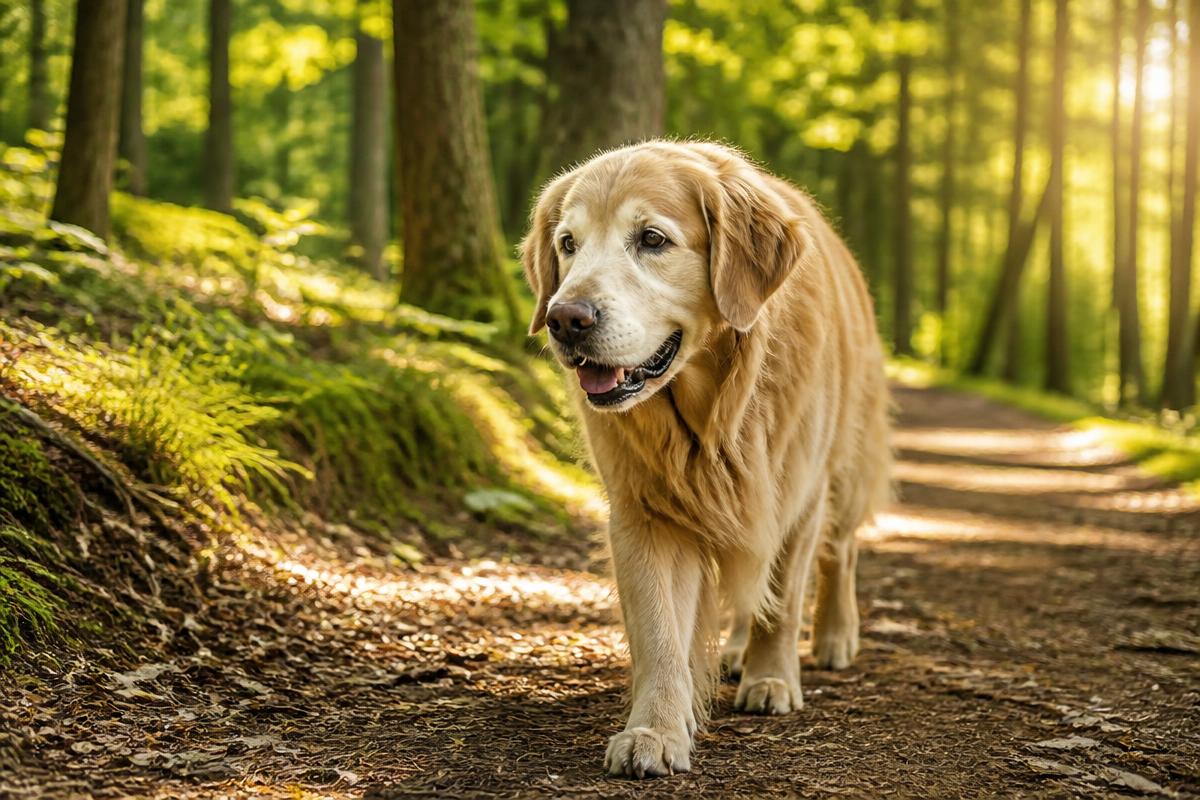
When we think about helping our dogs live longer, it is easy to focus on what we might do once they become old or unwell. Yet much of the care that helps them age well begins while they are still healthy: feeding them properly, preserving muscle mass, keeping them mentally engaged and checking their health regularly.
I think about longevity in much the same way as skincare. You start early and maintain it consistently. It is easier to preserve good muscle mass while your dog is strong than to rebuild it after significant loss. Looking after digestive health and establishing healthy screening results also gives us a better starting point than waiting until disease is advanced.
Lifespan is how long your dog lives. Healthspan is how much of that life they spend feeling well and able to enjoy their usual activities. The seven pillars of longevity bring together the areas of care that support both healthspan and lifespan. Some interventions can improve survival in particular diseases; others help mainly by preserving comfort, function and quality of life. We cannot promise extra years from every change, but we can help optimise each pillar and contribute to healthier ageing.
1. Gut health: helping your dog use the nourishment they receive
Your dog's body relies on the gut to digest food and absorb nutrients. Those nutrients supply energy and help maintain muscles, organs and other tissues. If digestive disease affects appetite or absorption, even a carefully chosen diet may not provide the nourishment your dog needs.
The gut also contains immune tissue and a community of microorganisms called the microbiome. These microorganisms interact with the intestinal lining and immune system, making gut health relevant to more than stool quality.[1]
For me, gut health is often the first priority in a dog who is currently well. Comfortable digestion helps them eat consistently and maintain their condition. Addressing recurring digestive problems before they lead to poor intake or weight loss can help protect that foundation. This does not mean that a probiotic or a particular diet has been proven to extend life; the benefit depends on the problem being addressed.
2. Mobility: preserving the ability to enjoy everyday life
Your dog needs strength and comfortable movement to get up, go outside, explore and spend time with you. Losing that ability can affect quality of life quickly, even if their other organs are functioning well.
Mobility includes muscle health, joint health and spinal health. Muscles help your dog support their body and move steadily, while comfortable joints and a healthy spine allow them to move freely. Pain or disease in any of these areas can make everyday movement difficult. When pain reduces activity, muscle can be lost through reduced use, leaving movement more difficult. Preserving muscle mass and managing pain help your dog remain active within their abilities.[2]
I prefer to begin muscle preservation while your dog is still moving well. Appropriate exercise gives their muscles regular work, while adequate nutrition supplies what they need to maintain them. Once considerable strength has been lost, rebuilding it can be more difficult, particularly when illness or pain limits exercise.
The benefit is easy to see in daily life: being able to rise comfortably, walk to the water bowl or enjoy a gentle outing helps your dog keep doing things they value. Exercise needs to suit their health rather than follow a fixed target for every dog.
3. Nutrition: supplying what the body needs to maintain itself
Your dog's body continually replaces cells and maintains tissues. Food provides the energy and nutrients needed for that work. Protein helps maintain muscle and other tissues, while fats, vitamins and minerals have roles throughout the body. A complete and balanced diet provides these nutrients in suitable amounts.[3]
Both inadequate intake and excess feeding can cause difficulties. Too little nourishment can contribute to loss of weight and muscle; excess body fat can make movement harder. Nutritional needs may also change as activity decreases or disease develops, so a diet that suited your dog several years ago may need adjusting.[2,3]
Personally, I favour natural diets that are less processed. Any homemade meals must still be nutritionally balanced. Wholesome-looking ingredients do not necessarily provide every essential nutrient in the right proportions.[3]
Nutrition contributes to healthspan by helping maintain body condition and supporting normal function. In some diseases, a carefully chosen diet is also part of treatment and can affect how well your dog feels and how long they live.
4. Organ health: maintaining the functions the whole body depends on
The heart circulates blood, bringing oxygen and nutrients to tissues. The kidneys remove waste and help regulate fluid balance. The liver processes nutrients and carries out many other essential tasks. Their work supports everything from appetite and energy to muscle and brain function.
When an organ becomes diseased, the effects can extend throughout the body. Your dog may have less energy, feel nauseous or struggle to maintain their condition. Keeping organ disease under control can therefore preserve several aspects of health at once.
Some conditions can be managed for a considerable time, particularly when treatment begins before severe complications develop. For example, kidney diets have been shown to improve survival and reduce episodes of illness in dogs with established chronic kidney disease.[2] The appropriate care depends on the diagnosis; a healthy dog does not need every treatment used for a dog with organ disease.
This pillar contributes to longevity through protecting essential function and managing disease when it occurs. Screening helps us decide when that management is needed.
5. Brain health: preserving engagement, learning and familiarity
Brain health is often one of the forgotten pillars of longevity. Your dog's brain allows them to recognise you, learn routines, explore and respond to their surroundings. When these abilities decline, enjoying a good quality of life can become difficult, even if your dog remains physically mobile.
In advanced dementia, also called canine cognitive dysfunction, your dog may become increasingly confused and lose their ability to recognise familiar people or make sense of familiar surroundings. Night-time pacing, howling and anxiety can occur, disrupting sleep and making it difficult for them to settle.[2,5] I find this one of the most challenging issues in geriatric care because of how deeply it affects a dog's comfort and quality of life. These behaviours can also have other causes, including pain, so they need veterinary assessment.
Mental activity gives your dog opportunities to use these abilities. Sniffing on a walk, learning a trick or working out a suitable food puzzle involves attention and problem-solving. Enjoyable social contact adds interest too, provided your dog feels comfortable.
A two-year study in ageing beagles found that behavioural enrichment helped slow decline in learning performance.[4] That supports offering regular opportunities to learn and explore, although it does not prove that a particular toy or activity prevents dementia or extends lifespan.
Brain health contributes to healthspan by helping your dog stay engaged with familiar people and daily activities. The aim is to provide experiences they enjoy and can manage as their needs change.
6. Screening: creating opportunities to act before illness is advanced
Some diseases develop quietly. Your dog may still eat, walk and appear well while changes are occurring internally. Screening gives your veterinarian information that appearance alone cannot provide.
I prefer to start while your dog is healthy, so we have a baseline for comparison. Repeated results can reveal values gradually moving away from their usual levels, even before they fall outside the laboratory's reference range. Those trends need interpretation alongside the examination and history; they are reasons to assess further, rather than diagnoses by themselves.[2]
The value of screening comes from what follows. Finding a treatable concern earlier may allow us to adjust diet, begin treatment or monitor more closely before your dog feels seriously unwell. The effect on lifespan depends on the disease and whether an effective intervention is available.
Regular screening can help protect healthspan by reducing the time a concern goes unrecognised. It also lets you and your veterinarian make decisions with more information, rather than first encountering the problem during a crisis.
7. Environment: making daily life safe and comfortable
Your dog's surroundings influence how easily they can use the strength and mobility they have. A slippery floor may discourage movement; inaccessible water or difficult stairs can make ordinary activities unnecessarily demanding.
Secure rugs, accessible resting places and suitable bedding can make home easier to navigate. A comfortable place to rest and activities that suit your dog's temperament also support their daily wellbeing.[2]
These changes are especially helpful as physical or sensory abilities decline. A dog who can move confidently around the house has more opportunity to remain active and take part in family life. Environmental care supports comfort, safety and function, helping your dog rest well and manage daily activities with less difficulty.
How the seven pillars work together
Good nutrition supports muscle, but your dog also needs comfortable digestion and appropriate movement to maintain it. A suitable home helps them use that mobility. Healthy organs support energy and appetite, while brain health influences how they interact with everything around them. Screening helps us assess where additional care may be needed.
The priorities change with your dog. For a currently well dog, I often begin with gut health, mobility and nutrition. If pain or organ disease is already affecting daily life, those concerns take precedence.
While your dog is still well, discuss their diet, digestion, exercise, mental stimulation and screening plan with your veterinarian. Together, you can decide where a few practical changes would help most and build them into daily life. Maintaining these areas of health from an earlier age gives your dog more strength and function to carry into their older years.
References
- Barko PC, McMichael MA, Swanson KS, Williams DA. The Gastrointestinal Microbiome: A Review. Journal of Veterinary Internal Medicine. 2018;32:9–25. https://doi.org/10.1111/jvim.14875
- Dhaliwal R, Boynton E, Carrera-Justiz S, et al. 2023 AAHA Senior Care Guidelines for Dogs and Cats. 2023. https://www.aaha.org/resources/2023-aaha-senior-care-guidelines-for-dogs-and-cats/
- American Animal Hospital Association. 2021 AAHA Nutrition and Weight Management Guidelines for Dogs and Cats, including Home-prepared Diets. 2021. https://www.aaha.org/resources/2021-aaha-nutrition-and-weight-management-guidelines/home/
- Milgram NW, Head E, Zicker SC, et al. Learning ability in aged beagle dogs is preserved by behavioral enrichment and dietary fortification: a two-year longitudinal study. Neurobiology of Aging. 2005;26:77–90. https://doi.org/10.1016/j.neurobiolaging.2004.02.014
- American Animal Hospital Association. How sleep shapes canine behavior. 2026. https://www.aaha.org/trends-magazine/publications/how-sleep-shapes-canine-behavior/