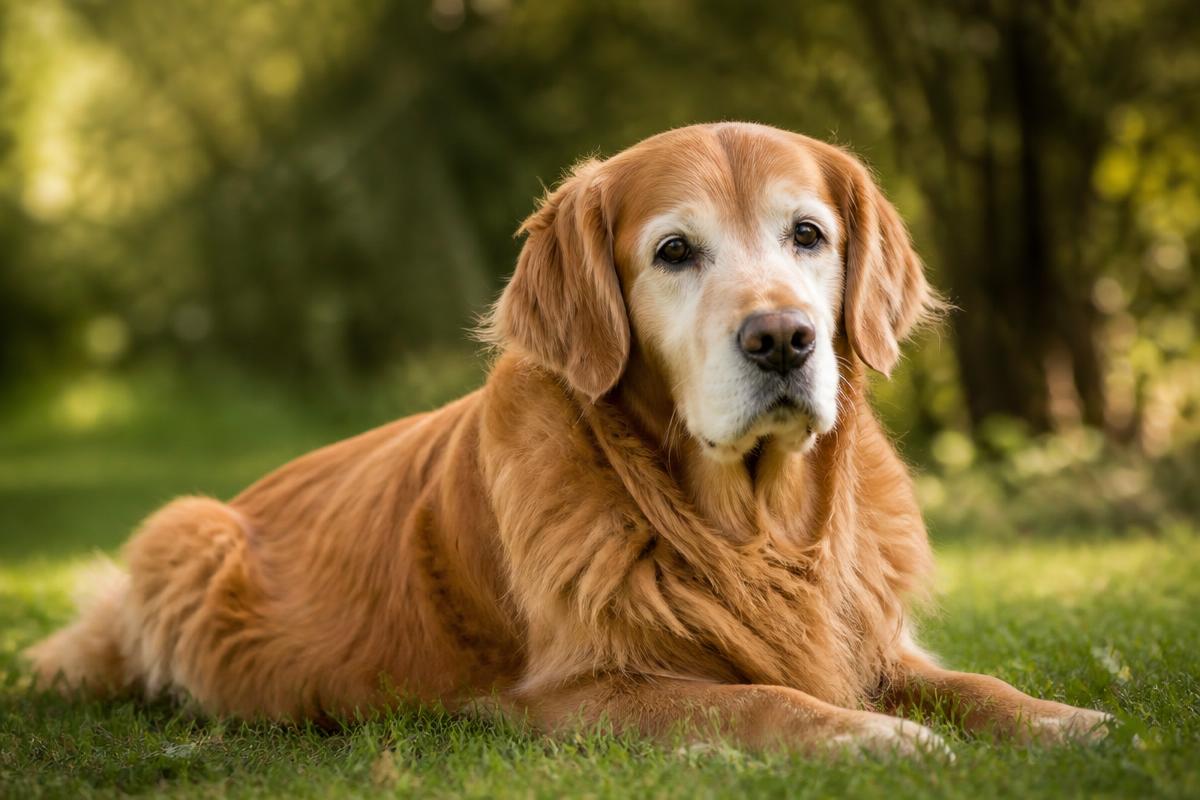
At some point, every owner looks at their dog and thinks, he is getting older.
There is more grey around his muzzle. He sleeps a little longer. Perhaps he no longer launches himself out of bed with quite the same enthusiasm.
It can feel bittersweet. There is sadness in seeing the years pass, but also a quiet sense of gratitude for how many of them you have shared.
Ageing brings real changes, but old age itself is not a disease. The difficulty is that medical problems often develop gradually in older dogs and can easily be mistaken for “just getting old”.
Knowing what is expected — and what deserves a closer look — can make a meaningful difference to your dog’s comfort and health.
What does normal ageing look like?
Normal ageing tends to be gradual and mild. Most importantly, it should not cause persistent pain or significantly interfere with your dog’s daily life.
A greying muzzle, sleeping a little more and preferring shorter walks may all occur with age. Your dog should still be interested in food, enjoy familiar activities and remain engaged with the people around him.
The pattern matters more than the individual change. A sudden change, a steadily worsening problem or anything that affects eating, movement, sleep, toileting or behaviour should not be blamed on age alone.
When does a dog become senior?
There is no single age at which every dog becomes senior. Veterinary guidelines generally describe the senior stage as the final quarter of a dog’s expected lifespan.
Because larger dogs tend to have shorter lifespans, they usually reach their senior years earlier.
| Adult size | Senior-focused care commonly begins |
|---|---|
| Toy and small dogs, under 10 kg | Around 10 years |
| Medium dogs, 10–25 kg | Around 8–10 years |
| Large dogs, 25–45 kg | Around 7–9 years |
| Giant dogs, over 45 kg | Around 6–7 years |
These are only practical starting points. Breed, body condition, previous illness and individual health all affect how a dog ages. The old idea that one dog year equals seven human years is far too simplistic.
Changes you may notice as your dog ages
Coat. Greying around the muzzle and eyes is one of the most obvious signs of ageing. It is harmless and needs no treatment. Hair loss, bald patches, persistent itching, recurrent skin infections or a major change in coat quality may indicate an underlying problem.
Sleep and activity. Older dogs often sleep more and may prefer several shorter walks. They may also need longer to recover after an unusually active day. However, a dog who stops wanting to walk, play or interact may be experiencing pain or illness rather than simply becoming less energetic.
Hearing and vision. Hearing and vision may decline gradually. A dog with reduced hearing may respond more slowly when called or startle when approached from behind. A blue-grey haze within both eyes is often nuclear sclerosis, a common age-related change that usually has only a mild effect on vision. A red, painful or suddenly cloudy eye requires prompt veterinary attention.
Mobility. Older dogs may lose some speed, but repeated stiffness after rest, difficulty getting up, slipping, hesitation on stairs or reluctance to jump into the car can indicate arthritis, spinal pain or muscle weakness. These signs are common, but that does not make them normal or untreatable.
Muscle and body condition. Dogs can gradually lose lean muscle as they age, known as sarcopenia. It is often most noticeable around the thighs, hips and spine. Visible muscle loss should be assessed rather than simply watched.
Behaviour and memory. Some older dogs take a little longer to respond. More significant changes such as disorientation, pacing at night, staring into corners, house-soiling, altered social interaction or new anxiety can be signs of canine cognitive dysfunction.
Track what matters. A simple weekly check-in on your dog's energy, appetite, comfort, stools, sleep, and thirst makes changes far easier to spot.
The pattern matters
Imagine two nine-year-old Labradors.
The first has a greying muzzle, sleeps a little longer and prefers a shorter evening walk. He still greets his family at the door, eats normally and looks forward to his routine. That is consistent with normal ageing.
The second has lost weight over six weeks, seems less interested in the family and has started drinking much more water. None of these changes may appear dramatic on their own, but together they suggest that something medical is developing.
The important difference is not the dogs’ age. It is the speed, combination and effect of the changes.
Frequently Asked Questions
Is one dog year really equal to seven human years?
No. Dogs do not age at the same rate throughout life, and size and breed make a substantial difference. A ten-year-old small dog and a ten-year-old giant dog are at very different biological stages.
Does my senior dog need more frequent check-ups?
Once a dog reaches his size-appropriate senior years, I generally recommend twice-yearly wellness visits. This does not mean something is necessarily wrong; it gives more opportunities to compare weight, muscle condition, mobility, heart and lung sounds, dental health and other small changes over time.
How can I tell whether it is arthritis or just slowing down?
It is often difficult to tell from home observation alone. Look for stiffness after sleep, hesitation before jumping, difficulty on stairs, slipping on smooth floors, shorter strides or reduced enthusiasm for walks. These signs justify a mobility assessment rather than a guess.
Could confusion simply be part of old age?
Mild changes can be difficult to interpret, but disorientation, altered sleep patterns, house-soiling, night-time pacing and failure to recognise familiar routines should not be dismissed. Canine cognitive dysfunction is diagnosed after other possible causes have been considered.
What is the easiest way to monitor an ageing dog?
Once a week, take a minute to think about your dog’s appetite and weight, thirst and urination, stool quality, mobility, sleep, behaviour, and comfort and enjoyment of normal activities. Small changes are much easier to recognise when you are looking for them consistently.
What to Do This Week
Pick one day this week to observe your dog’s normal routine. Note his appetite, energy, mobility, sleep, thirst and any changes you have noticed over the past month. Use this as a baseline to discuss with your veterinarian at his next wellness visit.
When to See a Vet Urgently
Seek urgent veterinary care for laboured breathing, collapse, pale gums, sudden inability to stand, severe pain, a swollen abdomen with unproductive retching, or sudden loss of vision. Arrange a prompt examination for unexplained weight loss, increased thirst or urination, reduced appetite lasting more than 24 hours, repeated vomiting or diarrhoea, persistent stiffness or limping, or any steadily worsening change.
This article is for educational purposes only and does not replace professional veterinary advice. If your dog is unwell, please consult your veterinarian.
Ageing well is about more than any one habit — see our canine longevity framework for the seven areas I focus on.