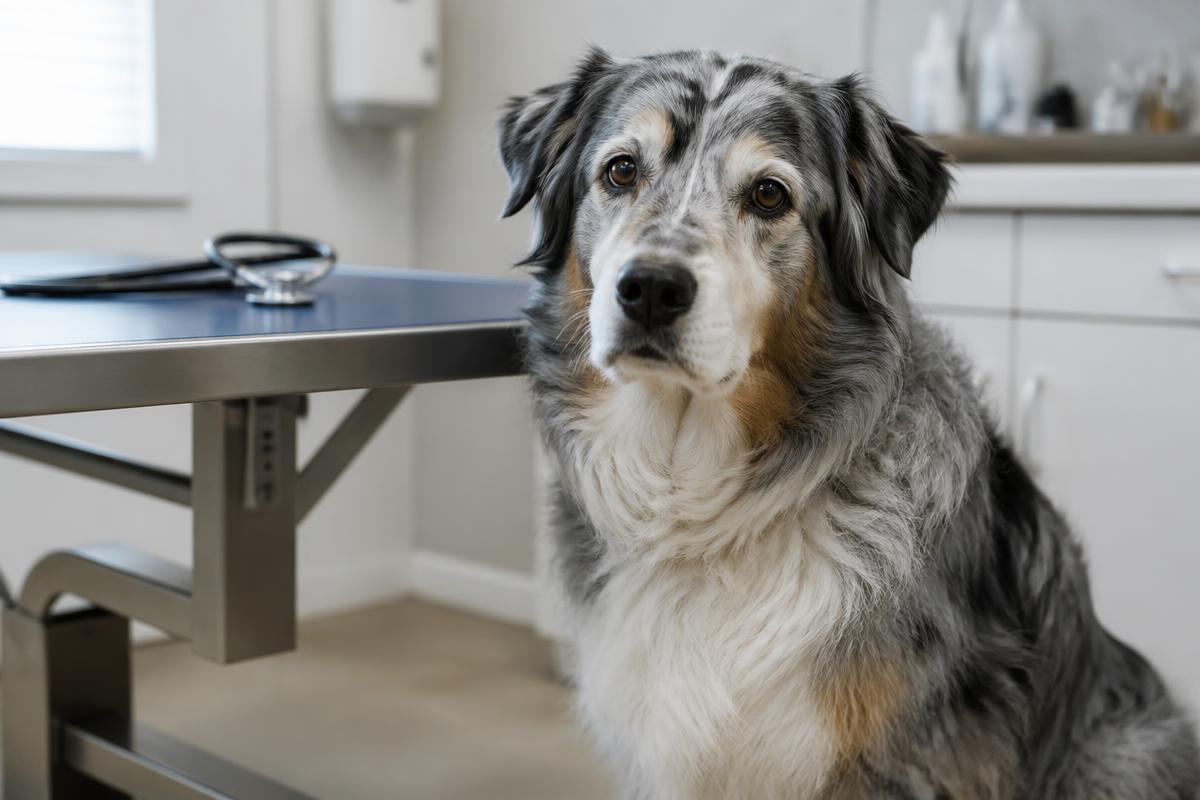
Human longevity medicine now has a huge market for biological-age testing, inflammation panels and metabolic biomarkers. It is understandable that dog owners are beginning to ask whether we should be looking for the same kind of information in our dogs.
At the moment, there is no single blood test that can tell us a dog's biological age or predict how long they will live. There is also no universally accepted canine longevity panel. What we do have is a great deal of useful information sitting inside routine bloodwork—some of which can be easy to overlook if we only check whether each result falls inside or outside the laboratory reference range.
For me, longevity testing is less about ordering an enormous panel and more about looking closely at patterns. Is the dog producing healthy red blood cells? Is iron available to the tissues? Is there a subtle sign of blood loss or inflammation? Are the kidneys and liver holding steady? Are metabolic markers beginning to drift?
Finding these changes early gives us more time to investigate and, where possible, correct them before they begin to affect how the dog feels.
Start with a complete blood count
A complete blood count looks at red blood cells, white blood cells and platelets. It may be considered a routine test, but it contains several useful longevity clues when the results are read together and compared over time.
Red blood cells and iron availability
Red blood cells carry oxygen around the body. The red blood cell count, haematocrit and haemoglobin tell us how many cells are present and how much oxygen-carrying haemoglobin they contain.
I also pay close attention to the red blood cell indices. MCV tells us the average size of the red blood cells, while MCHC tells us how concentrated the haemoglobin is within those cells.
When MCV and MCHC are low, the red blood cells are smaller and contain less haemoglobin than expected. If the reticulocyte haemoglobin is also low, this raises stronger suspicion that there is not enough iron available for normal red blood cell production. Reticulocyte haemoglobin may appear on a laboratory report as RET-He or CHr, depending on the analyser used. Because reticulocytes are newly produced cells, this measurement gives us a more recent picture of the iron available to the bone marrow.
The finding is more accurately described as iron-limited red blood cell production. It does not tell us why the iron is unavailable.
The dog's diet is one of the first things I would review. If the diet is home-prepared, incomplete or poorly balanced, inadequate iron intake is possible. Genuine dietary iron deficiency is much less common in dogs eating a complete and balanced commercial diet.
If the diet should be providing enough iron, simply adding an iron supplement may miss the real problem. Your vet may need to investigate whether the dog is losing small amounts of blood, not absorbing nutrients properly or experiencing inflammation that is preventing stored iron from being used normally. Chronic gastrointestinal blood loss is an important cause of iron deficiency in dogs. Poor absorption from intestinal disease can also contribute, although it is less common.
This combination of blood results can sometimes be one of the earlier clues that something is happening within the gastrointestinal tract, even when the dog has not developed severe vomiting, diarrhoea or weight loss. It does not prove that gut disease is present, but it gives us a reason to look more closely at the diet, stools, medications and digestive history.
From a longevity perspective, the benefit is the opportunity to intervene before obvious anaemia, muscle loss or more advanced gastrointestinal disease develops. Earlier recognition and management may help protect long-term health and quality of life, although these markers have not been shown to predict lifespan by themselves.
Reticulocytes: young red blood cells that may reveal compensation
Reticulocytes are young red blood cells newly released from the bone marrow. They are usually measured to see whether the bone marrow is responding appropriately when a dog is anaemic.
Sometimes the reticulocyte count is elevated even though the red blood cell count and haematocrit remain normal. The bone marrow may be producing extra cells quickly enough to compensate for red blood cells that are being lost or destroyed, so anaemia has not yet developed.
A persistently elevated reticulocyte count in a non-anaemic dog can therefore be a flag for internal blood loss, including slow gastrointestinal bleeding. However, blood loss is not the only possibility. Reticulocytosis without anaemia has also been seen with red blood cell destruction, heart or respiratory disease, low blood oxygen, inflammation, cancer and the effects of some medications.
I also notice when the reticulocyte count repeatedly sits near the top of the reference range, even if it has not crossed the laboratory cut-off. At present, a high-normal reticulocyte count is not a validated marker of gut disease and should not be treated as proof of internal bleeding. It becomes more meaningful when it appears alongside other changes, such as falling MCV or MCHC, low reticulocyte haemoglobin, a gradual reduction in haematocrit, dark stools, intermittent digestive signs or long-term use of medication that can irritate the gastrointestinal tract.
In that situation, I would rather review the pattern than dismiss each individual value because it is technically still normal. Your vet may recommend repeating the blood count, reviewing the blood smear, checking iron markers or investigating for a source of blood loss.
White blood cells
White blood cells respond to inflammation, infection, stress and changes within the immune system. The different types of white blood cells may suggest certain possibilities, including allergy, parasites, infection, immune-mediated disease or bone marrow disease.
A mild change does not identify where a problem is or what caused it. However, a white blood cell pattern that persists or gradually changes over time may support other evidence that the dog needs further investigation.
Platelets and ongoing inflammation
Platelets are best known for their role in blood clotting. Low platelet counts can occur with immune-mediated disease, infection, bleeding, increased platelet consumption or reduced production by the bone marrow. Platelets can also clump in the sample and produce a falsely low machine count, so a blood smear may need to be checked.
High platelet counts deserve attention too. A platelet count that remains markedly or extremely elevated can occur when there is ongoing inflammation somewhere in the body. This is known as secondary or reactive thrombocytosis.
Inflammation is not the only cause. Persistently high platelets have also been associated with cancer, hormonal disease, iron deficiency and some medications, particularly glucocorticoids. Research in dogs has not found a platelet threshold that reliably identifies the underlying disease.
For longevity screening, a persistent and substantial increase is a prompt to review the whole patient rather than a diagnosis in itself. I would look at the white blood cells, CRP, red blood cell and iron markers, medication history, physical examination and any subtle changes the owner has noticed at home. Further testing would then be directed towards the most likely sources of inflammation or other disease.
Kidney markers need urine results beside them
Creatinine, urea or BUN, and SDMA are commonly used to assess kidney filtration.
Creatinine is useful, but it is influenced by muscle mass and hydration. A thin older dog may have significant kidney disease without a dramatic creatinine rise because they produce less creatinine in the first place. A creatinine level that remains within the reference range but rises steadily from the dog's previous baseline may still deserve attention.
SDMA is less affected by muscle mass and can increase earlier than creatinine in some dogs with reduced kidney filtration. It is not a perfect standalone test. An unexpected increase may need to be repeated, and kidney disease should be assessed using the whole clinical picture rather than one result.
Urine testing is an essential part of longevity screening because blood values alone can miss early kidney disease. Urine specific gravity shows how well the kidneys are concentrating urine. Depending on the findings, your vet may also recommend a urine protein-to-creatinine ratio, urine culture, blood pressure measurement or imaging.
What liver values can—and cannot—tell us
ALT, ALP, GGT and bilirubin are commonly included in a biochemistry panel. They help us recognise patterns of liver cell injury or changes in bile flow, but liver enzymes are not the same as liver function tests.
A mild ALT increase does not automatically mean that a dog has primary liver disease. Liver enzymes can also rise with gastrointestinal disease, pancreatitis, hormonal disease, muscle injury and some medications. It is equally unsafe to assume that a mildly elevated ALT is simply coming from the gut.
I look at how high the value is, whether other liver markers have changed, whether the result is rising over time and whether the dog has any relevant symptoms. Repeat bloodwork may be enough for a small, isolated increase. A persistent or progressive abnormality may justify ultrasound, bile acids or liver sampling.
CRP: one of the markers I routinely include
C-reactive protein, or CRP, is produced by the liver as part of the body's response to inflammation. It can rise quickly and may show a clearer change than the white blood cell count in some inflammatory conditions.
I routinely include CRP in my senior health screening panels. A senior dog who appears clinically well would generally be expected to have a CRP result within the laboratory reference range. If it is elevated, I treat that as a flag to look deeper—even when the examination, haematology and biochemistry do not immediately reveal an obvious problem.
CRP does not provide a diagnosis or tell us where the inflammation is coming from. An unexpected increase prompts me to review the dog's history and examination more closely, compare the result with previous tests and look for possible sources of inflammation. Depending on the patient, this may include dental disease, skin or ear disease, gastrointestinal or pancreatic disease, infection, immune-mediated disease, joint inflammation or cancer. Repeat testing or imaging may be appropriate if the cause is not clear.
The laboratory's own reference range matters because CRP results vary between assays. Mild elevations may also occur with early or resolving inflammation, while a normal CRP does not rule out every inflammatory condition or hidden disease.
Routine CRP testing is not yet included in every veterinary senior-screening guideline, but I find it useful because it can identify an inflammatory signal in a dog who still looks well. For longevity screening, that is exactly the stage at which I want to know that something may be changing.
Track what matters. A simple weekly check-in on your dog's energy, appetite, comfort, stools, sleep, and thirst makes changes far easier to spot.
Fasting triglycerides and metabolic health
Triglycerides are fats carried in the blood. Their concentration rises after a meal, so the result is difficult to interpret unless the sample has been collected after an appropriate fast. This is usually around 12 hours, although your vet may give different instructions depending on your dog's health and the laboratory being used. Water is normally still allowed.
Persistently high fasting triglycerides can occur with diabetes, hypothyroidism, Cushing's disease, obesity and certain medications. Some dogs have primary hyperlipidaemia, meaning the problem is not caused by another disease. Miniature Schnauzers are particularly predisposed and may develop marked elevations without appearing unwell.
Hypertriglyceridaemia has been associated with pancreatitis in dogs, particularly in Miniature Schnauzers, although the association does not prove that high triglycerides caused every case. Marked or persistent elevations still deserve investigation and management.
High triglycerides and hyperlipidaemia have also been associated with gallbladder disease. Dogs with hyperlipidaemia may have poorer gallbladder emptying, which can encourage bile to remain in the gallbladder and contribute to the formation of biliary sludge. Persistent or increasingly immobile sludge may be part of the process that leads to gallbladder mucoceles, while dogs with gallstones have also been found to have higher triglyceride concentrations than healthy dogs.
Not every dog with high triglycerides will develop sludge, a mucocele or gallstones. However, a persistent elevation—particularly in a predisposed breed or a dog with abnormal liver values—may justify closer assessment of the gallbladder, often with an abdominal ultrasound.
For some dogs, a fasting triglyceride level is a useful addition to longevity screening because it can identify a metabolic problem before the dog develops obvious symptoms.
Trends are often more valuable than a single result
Laboratory reference ranges are designed to include most healthy dogs. They do not define the ideal result for every individual dog.
A creatinine level that has risen steadily over three years may be more important than one isolated result just outside the reference range. The same applies to a gradually falling haematocrit, declining reticulocyte haemoglobin, persistently high-normal reticulocytes, rising platelets, increasing ALT or a steady rise in fasting triglycerides.
Not every change represents disease. Hydration, fasting, exercise, medication, recent illness and differences between laboratories can all affect the results. Whenever possible, compare samples collected under similar conditions and avoid drawing conclusions from one minor variation.
A practical longevity-focused screen
For my routine senior health screening, I would typically run:
- A full haematology panel, including red and white blood cells, platelets and the available red blood cell indices
- A full biochemistry panel to assess the liver, kidneys, electrolytes, proteins, glucose and other metabolic markers
- SDMA as an additional marker of kidney filtration
- CRP to screen for an unexpected inflammatory signal
- A urinalysis, including urine specific gravity
Depending on the dog's breed, diet, medications, clinical history and previous results, I may also include fasting triglycerides or other biomarkers as indicated. These might include thyroid testing, iron studies, a urine protein-to-creatinine ratio, pancreatic markers or bile acids. Blood pressure measurement and imaging may also be recommended when appropriate.
The panel will not be identical for every dog. These core tests provide a broad overview, while any additions should be relevant to the individual patient and capable of changing what your vet recommends next.
Can these biomarkers tell us how long a dog will live?
No blood panel can currently predict an individual dog's lifespan. Most of the markers discussed here measure organ function, blood cell production, inflammation or metabolic health rather than biological ageing itself.
Research into canine ageing biomarkers is developing quickly, including work on metabolomics, epigenetic ageing and proteins associated with inflammation and neurological disease. Many of these tests are still research tools rather than established clinical screening tests.
The value of bloodwork today is more practical. It can identify small, actionable changes while a dog still appears well. Earlier investigation may allow us to correct a dietary imbalance, find hidden blood loss, manage gut disease, reduce inflammation or support an organ before the problem becomes more advanced.
The aim of canine longevity medicine is to protect healthspan—the years in which a dog remains comfortable, mobile, engaged and able to enjoy normal life—and, where possible, help that dog live longer as well.
What to Do This Week
Gather your dog's previous blood test reports in one place and line up the same markers side by side—haematocrit, MCV, MCHC, reticulocytes, creatinine, SDMA, ALT and platelets. Look for values that are drifting in one direction, even when each individual result was reported as normal. Bring that comparison to your dog's next check-up and ask your vet whether CRP, SDMA, a urinalysis or fasting triglycerides would add anything useful for your dog.
When to See a Vet Urgently
Blood test results are never a substitute for how your dog is doing at home. Contact your vet promptly if you notice pale gums, weakness or collapse, black or tarry stools, blood in vomit or stool, sudden increases in thirst and urination, unintentional weight loss, persistent vomiting or diarrhoea, or a dog who is simply not themselves.
This article is for educational purposes only and does not replace professional veterinary advice. If your dog is unwell, please consult your veterinarian.
Biomarkers sit inside a broader plan — see the seven pillars of canine longevity.