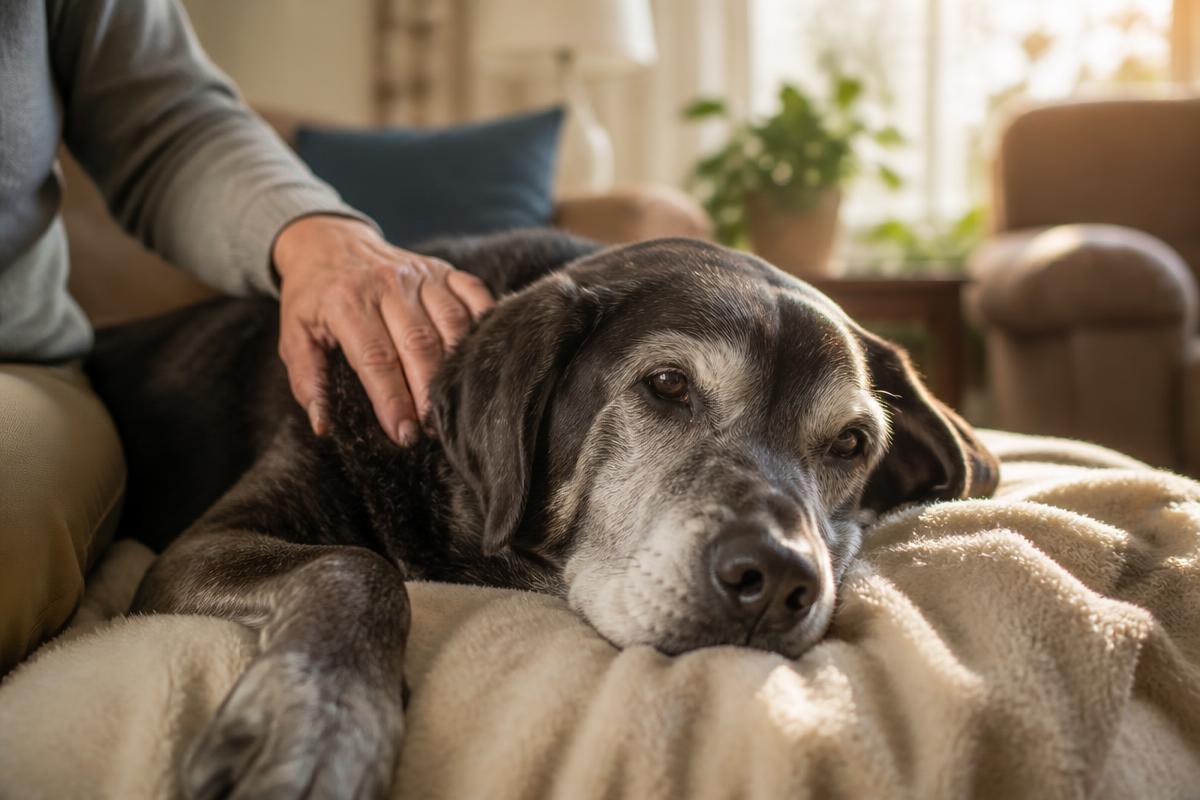
Few decisions in a dog's life carry as much emotional weight as whether to euthanise and, if so, when. Families often look to their vet for a clear answer, but there can be considerable hesitation about whether the time is truly right—especially while their dog is still able to move around or continues to eat. These remaining abilities can make the decision feel less clear, even when the dog's overall health and comfort are declining.
After more than 15 years of caring for dogs through the final stages of their lives, I have stopped believing that there is one answer that will be right for every family.
What assisted passing means
We often speak about euthanasia as though it is a single decision made at a particular moment. In reality, there is usually a period of uncertainty, discussion or waiting between recognising that a dog is approaching the end of their life and the moment they eventually pass.
A family may still be trying to decide whether to euthanise. Another family may have chosen euthanasia, but the appointment is a day or two away. Some families may have decided that they do not want to euthanise and would prefer to support their dog through a natural passing. This period of decision-making, uncertainty and waiting may last for hours or even days.
The care provided during this time is what I mean by assisted passing.
Assisted passing does not describe how a dog ultimately passes. It describes how they are cared for until that moment. The dog may eventually pass naturally, or they may pass through euthanasia at home or in a veterinary clinic. Whatever the eventual outcome, they still need to be kept as comfortable as possible throughout the time leading up to it.
Care does not stop while a family decides
We already expect this for people. Euthanasia for humans is available in only certain parts of the world and, even where it is legal, access remains restricted. When it is unavailable or not chosen, medical care does not simply stop. People may spend their final days in hospital, in a hospice or at home with hospice support, receiving medication and nursing care to ease their discomfort until they pass.
We would never consider it acceptable to leave a seriously ill person alone at home for several days without appropriate medical or nursing care. Our pets should be treated no differently.
Whatever the family ultimately decides, proper medical treatment and attentive nursing care must continue until the moment their dog passes. Choosing not to euthanise does not mean choosing not to treat. Nor should care stop simply because euthanasia has been booked for another day.
The purpose of treatment may have changed, but the need for care has not. Instead of trying to cure the disease or extend life at any cost, the focus moves towards comfort.
Assisted passing has two equally important parts
Assisted passing is not a matter of taking a dog home and waiting. It is an active care plan designed around the individual dog and their needs.
Broadly, it has two parts: medical care and nursing care. Medical care treats the symptoms causing discomfort. Nursing care makes sure the dog's physical needs are met from one hour to the next.
One cannot replace the other.
Medical care
Medical care begins with identifying what is making the dog uncomfortable and deciding how best to manage it.
Pain relief is often part of the plan, but pain is not the only reason a seriously ill dog may feel unwell. Nausea, dehydration, anxiety, breathlessness, constipation, seizures and an inability to rest comfortably can all cause considerable distress.
The treatment needed will depend on the individual dog and their disease. A dog with kidney failure will not need exactly the same care as one with advanced cancer, heart failure or a neurological condition.
Many dogs eventually struggle to eat or take tablets. Some can continue with oral medication, while others may need liquid preparations, medication absorbed through the gums, patches or injections. When injections are the most practical option, families can often be taught how to give them safely at home.
Hydration also needs to be considered individually. Additional fluids may help when dehydration is contributing to nausea and weakness, but they are not suitable for every patient. Dogs with heart disease, breathing difficulties or fluid accumulation may need a much more cautious approach.
The medical plan will often need to change as the dog's condition progresses. A dose that controlled pain last week may no longer be enough. A dog who swallowed tablets yesterday may refuse them today. If a dog deteriorates while waiting for a euthanasia appointment, the family should contact their vet. Medication may need to be adjusted, the dog may need to be reassessed or the appointment may need to be brought forward.
Track what matters. A simple weekly check-in on your dog's energy, appetite, comfort, stools, sleep, and thirst makes changes far easier to spot.
Nursing care
Medication is only one part of keeping a dog comfortable. Someone still needs to administer it, observe whether it is working and notice when the dog's condition changes.
The amount of nursing care required depends heavily on how independent the dog remains. A dog who can stand, walk outside, drink and reposition themselves may need relatively little physical help. A dog who cannot get up on its own is entirely different.
They may need someone to turn them regularly, help them toilet, clean them when they urinate or defecate, change wet bedding and check their skin for irritation or pressure wounds. They may need water brought to them or help moving into a position where they can breathe more easily. Some dogs become anxious when left alone and settle only when a familiar person is nearby.
These needs can change very quickly. A dog who was walking yesterday may need help standing today. By tomorrow, they may be unable to move without assistance.
A completely dependent dog cannot be left alone for a full working day. Even several hours may be too long if they need frequent medication, cannot move away from soiled bedding or could deteriorate rapidly. Leaving a seriously ill dog without adequate medical or nursing care for several days is not assisted passing.
Most families would never knowingly allow their dog to suffer. More often, they simply underestimate how quickly their dog may become dependent or how demanding end-of-life nursing can be.
Sometimes one family member can remain at home. In other households, relatives take turns or an experienced carer is brought in. If nobody can be available for most of the day, caring for the dog at home may no longer be realistic. Recognising this is not a failure. It is an honest assessment of what the dog now needs.
When home care is possible
Where it is medically realistic and the family can provide enough care, my own preference is usually for my patients to spend this period at home.
Home is familiar. It smells right. Their bed is there and their people are nearby. For many dogs, that brings a sense of calm that is difficult to recreate in hospital.
Home may be where a family supports their dog through a natural passing. It may also be where the dog spends their final days before a planned euthanasia, whether that euthanasia eventually takes place at home or in a clinic.
But being at home is not, by itself, palliative care. A familiar room cannot make up for uncontrolled pain, severe nausea or genuine difficulty breathing. Home is only the kinder setting while the dog's medical and nursing needs can be met there.
Some conditions are very difficult to manage outside a hospital. Repeated seizures, severe breathing difficulties, major bleeding, uncontrolled pain or prolonged panic may require oxygen, injectable medication, sedation or continuous monitoring.
In these situations, remaining at home may no longer be realistic. Some dogs will be more comfortable in hospital, where a medical team can respond quickly as their condition changes. This may be the right choice whether the family opts for euthanasia or continues medical support while allowing their dog to pass naturally.
Assisted passing is not limited to care provided at home. It can continue in hospital if that is where the dog's symptoms can be managed most effectively. Moving a dog into hospital does not mean the family has abandoned its wish for a natural passing. Choosing euthanasia after beginning an assisted-passing plan does not mean the original plan was wrong. It means the dog's condition has changed and the plan has changed with it.
Families caring for a dog at home should know who to call, where the nearest emergency clinic is and which changes mean their dog needs urgent medical help. A backup plan does not take anything away from the family's preferred choice. It protects their dog if events unfold differently from the way everyone hoped.
There is no single right decision
Some dogs pass naturally and peacefully with good medical and nursing support around them. A natural passing cannot, however, be guaranteed to be entirely quiet or free from discomfort. Dogs may become restless or confused. Their breathing may change, they may lose control of their bladder or bowels, and they may become increasingly weak or unconscious.
Some of these changes are a natural part of the body shutting down and are not necessarily signs of pain. Others indicate genuine distress. Families need enough veterinary guidance to understand what they are seeing and must be able to seek help when they are unsure.
Euthanasia brings a different kind of uncertainty. Even when a family knows medically that it is a compassionate decision, they may still wonder afterwards whether they chose too early or whether they could have had more time. Those thoughts are common and do not mean the decision was wrong.
Family members may also disagree. One person may feel ready while another does not. Cultural beliefs, religious faith, previous experiences of loss and the circumstances of the individual dog can all shape how people approach this decision.
My role is not to tell a family which beliefs they should hold. It is to explain what their dog is experiencing, what can still be managed and what may happen next. I understand the different choices that people make as long as their pet is appropriately cared for. If comfort can no longer be maintained under the current plan, the plan needs to change.
Comfort must remain at the centre
Assisted passing is not an alternative to euthanasia. It is the care provided before a dog passes, whether that passing eventually happens naturally or through euthanasia.
The final stage of a dog's life is shaped by more than its last few minutes. It is shaped by the pain that was relieved, the nausea that was treated, the clean bedding, the medication given on time and the person who stayed close enough to notice when something changed.
Families may reach different decisions about how and when their dog passes. The responsibility remains the same throughout: to keep their dog as comfortable, safe and well cared for as possible until that moment comes.
What to Do This Week
If your dog is approaching the end of their life, write down a simple care plan with your vet: which medications are given and when, what to do if your dog refuses tablets, how much help they now need to stand, toilet and reposition, and who will be at home with them during the day. Add the phone number of your own clinic and your nearest emergency hospital to the same page, along with the specific changes that mean your dog needs to be seen sooner.
When to See a Vet Urgently
Contact your vet or an emergency clinic straight away if your dog is struggling to breathe, has repeated or prolonged seizures, is bleeding, appears panicked or cannot settle, is crying out or clearly in pain despite medication, or is vomiting persistently and cannot keep medication down. If your dog deteriorates while waiting for a euthanasia appointment, call the clinic — medication may need adjusting or the appointment may need to be brought forward.
This article is for educational purposes only and does not replace professional veterinary advice. If your dog is unwell, please consult your veterinarian.