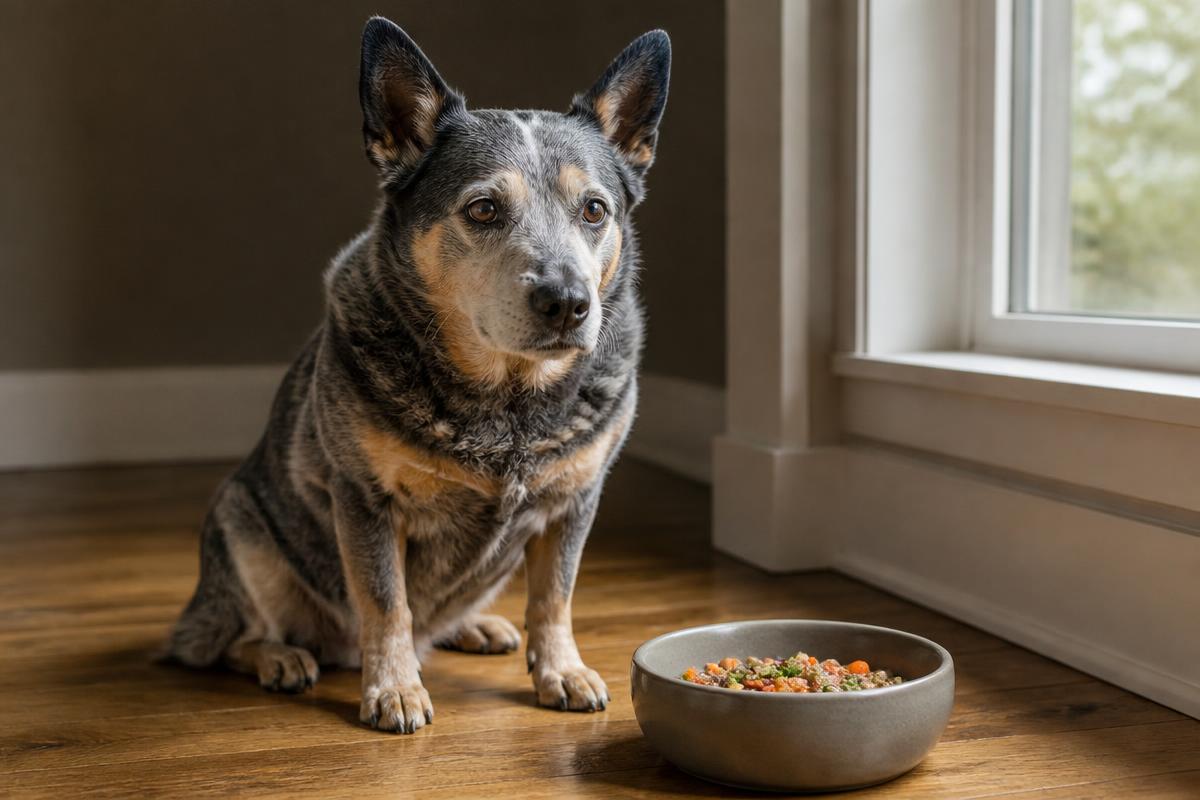
When owners ask me what they should feed their older dog, I usually start by finding out exactly what the dog is eating now. I want to know whether they finish their meals, how their weight has changed, and whether they have any medical conditions that affect what they should eat.
A healthy older dog who is doing well on a balanced diet may not need a change just because they have reached a certain age. Another dog of the same age may be losing muscle, putting on weight or developing a chronic illness, and need a different approach.
My personal preference is for fresh meals made with good-quality, human-grade whole ingredients rather than ultra-processed food, provided those meals are properly balanced. But every dog and family is different. I always consider which options are suitable and sustainable for the family, along with the dog's medical conditions, before recommending a particular type of food. This is particularly important if a prescription diet is needed to manage a medical condition.
In Singapore, we have plenty of choices, including dry and wet food, commercially prepared fresh meals and home-cooked food. The best choice depends on the dog eating it, not just how the food is described on the packet.
Does my dog need food labelled “senior”?
Not necessarily. There isn't one nutritional formula that suits every older dog, and a senior label doesn't automatically mean that the food is more suitable.
Some senior diets have fewer calories, while others contain different amounts of protein, fat or fibre. A lower-calorie diet may help a dog who has become less active and is gaining weight, but it may be unsuitable for a dog who is already thin or losing muscle.
If your dog is eating well, maintaining a healthy body condition and doing well on their current food, I would first consider whether there is a reason to change it. As dogs become older, their health and individual needs matter more than the age category printed on the packaging.
What matters most in an older dog's diet?
It depends on the dog's age, health and what they are currently eating. A healthy older dog may not need much change, while a dog with weight loss, muscle loss or a chronic illness may need a different balance of nutrients. I look at the individual patient rather than applying the same diet to all senior dogs.
I also look at whether the food agrees with the dog. Are their stools consistently well formed? Do they vomit, become bloated or have a lot of gas? Are they eating enough, and are they maintaining their weight and muscle condition? A diet can look suitable from its ingredients but still not agree with an individual patient.
Calorie intake is another consideration. Some older dogs need fewer calories as their activity declines; others are losing weight or muscle and need more nutritional support. I look at weight trends, body and muscle condition, the dog's exercise routine, and the exact quantities of food and treats they receive.
Is fresh food better than dry or wet food?
I personally lean towards balanced fresh meals made with whole ingredients. It reflects how I approach my own diet: I prefer eating more whole foods and fewer heavily processed foods.
That doesn't mean fresh food will be the best option for every dog. Some dogs do particularly well on kibble or a specific tinned diet. Others are fussy about cooked food but happily eat their usual commercial meals. Some families don't have the time, storage space or routine to prepare fresh food consistently, and I take that into account when making a recommendation.
For owners who prefer home-cooked meals, the main concern is nutritional balance. Chicken, rice and vegetables may make a wholesome-looking meal, but they don't automatically provide all the vitamins, minerals and other nutrients a dog needs. A home-cooked diet needs a reliable, complete recipe, including any vitamin or mineral supplements required to make it balanced.
The term human-grade may describe ingredient or handling standards, but it doesn't tell us whether the finished diet is nutritionally complete. Similarly, I wouldn't dismiss a well-formulated commercial food solely because it is processed. I want to know what the diet actually provides and whether the dog does well on it.
How do I compare senior dog foods sold in Singapore?
I start with the ingredient list and nutritional analysis on the packet. I look at the protein, fat and calorie content, and then consider whether they suit the dog's age, body condition and medical history. For some medical conditions, nutrients such as phosphorus or sodium need closer attention.
There are a few brands I am familiar with and tend to favour because I've had good feedback from owners about their dogs enjoying the food and having settled digestion. That experience is useful, although it doesn't mean the same brand will agree with every patient.
When comparing foods, it's worth remembering that the percentages on the label can be misleading. Wet and fresh food contain much more water than kibble, so a fat or protein percentage cannot be compared directly across these diets. Where the amount matters medically, I look at the typical nutrient content and how much the dog receives relative to their calorie intake. The guaranteed figures on some labels are minimums rather than the actual amount in the food.
Should senior dogs eat less protein to protect their kidneys?
Not necessarily. I look at how old the dog is, how much protein they are already eating, their muscle condition and activity, and what their blood and urine results show. I may review a particularly high-protein diet in a very elderly dog, but I would not recommend a low-protein diet simply because a dog is old. They still need enough protein to maintain muscle.
If kidney function is a concern, I would assess the results more closely before changing the diet. For dogs with diagnosed chronic kidney disease, a therapeutic renal diet may be appropriate, with particular attention to phosphorus, protein and adequate calorie intake. The recommendation depends on the individual dog's condition rather than age alone.
You can read more in my guide to chronic kidney disease in dogs.
What if my dog has arthritis, heart disease or digestive problems?
With arthritis, I look at weight and muscle condition alongside the dog's omega-3 intake, particularly EPA and DHA. An overweight dog may benefit from weight reduction, while a dog who has lost muscle needs enough nutrition to support strength and movement. I would adjust the diet according to the individual dog's overall health and activity.
In dogs with heart disease, sodium may need to be controlled depending on the condition and its stage. I am also careful about maintaining their appetite, calorie intake and muscle mass, particularly if they have developed congestive heart failure. I wouldn't put every dog with an early heart murmur on a severely restricted diet.
For dogs with digestive problems, I first consider whether a food intolerance, including intolerance to a particular protein, might be contributing. Some dogs need a more digestible diet, while others have problems with fat. If pancreatitis is suspected or has been diagnosed, fat intake becomes particularly important.
For dogs who need a lower-fat diet, I often look for less than 8% fat in the nutritional analysis on the food label as an initial guide. However, the percentage alone does not tell me whether the diet is suitable. Wet, fresh and dry diets contain very different amounts of moisture, so I check the actual fat content and how much the dog is eating before making a recommendation. Not every digestive problem requires fat restriction.
Does Singapore's climate change how I should store my dog's food?
In our heat and humidity, I recommend keeping opened wet food refrigerated, storing fresh or frozen meals at the correct temperature, and avoiding leaving moist meals out in a warm room. If a chilled or frozen delivery arrives unexpectedly warm, I would check with the supplier rather than assume it is safe to feed.
Dry food needs protection from heat and moisture too. Keeping it securely closed in its original packaging also means the expiry date and batch details remain available.
Fresh water should always be available. If an older dog suddenly starts drinking a lot more than usual, I would want that investigated rather than assuming it is due to the weather.
What if my older dog is becoming fussy with food?
When an owner tells me their dog is becoming picky, I ask what has actually changed. Are they still finishing their meals but taking longer, or are they leaving half their food? Are they losing weight, vomiting, passing soft stools or struggling to chew?
Dental pain, nausea and other medical problems can affect appetite. Warming food slightly or offering a softer texture may help, but I wouldn't keep trying different brands if the dog is consistently eating less.
If an older dog is still eating their usual amount but taking longer, I would monitor them over the next few days, provided they seem otherwise well. If they are eating only about half their usual amount, I would watch them closely for the next day and arrange an examination if they have not returned to normal by day two. If an older dog refuses two consecutive meals, I generally recommend a same-day or next-day vet visit, depending on their other symptoms. Repeated vomiting, inability to keep water down, severe pain, collapse or marked weakness needs urgent attention.
You can read more in Dog Not Eating? When to Worry and What to Do.
How should I change my dog's diet?
I usually recommend a gradual transition over about two weeks, provided the dog is well. I start with a small amount of the new food mixed into the old and gradually increase it while watching their appetite and stools.
If the dog begins vomiting or develops diarrhoea, I stop and reassess. Sometimes I try a slower transition; sometimes I decide a different food is worth trying. During this period, I prefer not to introduce new treats or supplements as well, because too many changes make it difficult to work out what has caused a problem.
I would also keep an eye on the dog's weight, muscle condition and general health after the transition. If their appetite, body condition or medical needs change, I would review the diet again rather than assume the same food is still appropriate.
For more on caring for an older dog, see my Senior Dog Care Guide and article on preserving muscle.
References
- Singapore Animal & Veterinary Service (AVS). Caring for a dog.
- Cornell University College of Veterinary Medicine. Choosing food for your senior dog.
- American Animal Hospital Association (AAHA). 2023 Senior Care Guidelines: Nutrition.
- American Animal Hospital Association (AAHA). 2023 Senior Care Guidelines: Disease Management — Nutritional.
- International Renal Interest Society (IRIS). CKD staging and treatment guidelines.
- World Small Animal Veterinary Association (WSAVA). Global Nutrition Guidelines.
- Tufts Cummings School of Veterinary Medicine, What Is Guaranteed about the Guaranteed Analysis?.
- Merck Veterinary Manual. Pancreatitis in dogs and cats.
- ACVIM consensus. Diagnosis and treatment of myxomatous mitral valve disease in dogs.
This article provides general educational information and does not replace veterinary advice tailored to your dog.