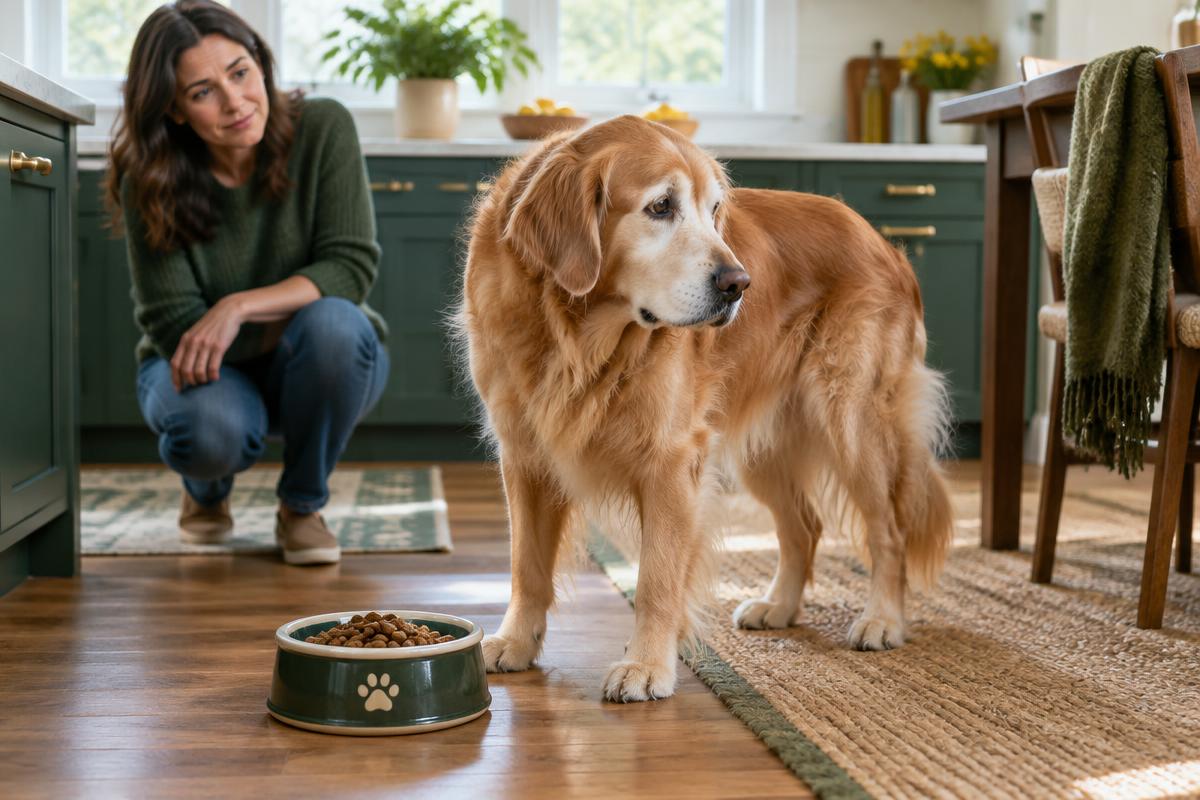
“My dog isn't eating” can mean a complete refusal of food, eating half the usual amount, needing repeated encouragement or turning down normal meals while still accepting treats. I would not manage all of these dogs in the same way.
What matters is how much your dog's appetite has changed, how long it has been going on, their age, and whether anything else seems abnormal. If an otherwise well dog is still eating but has not returned to normal by the second day, I would arrange an examination. With an older dog, I am more cautious: refusing two meals in a row is enough reason to call your veterinarian for the next available appointment.
Repeated vomiting, inability to keep water down, severe lethargy, obvious pain or difficulty standing needs earlier attention. You do not need to wait until a dog has stopped eating completely before the change matters.
How long should I wait if my dog isn't eating?
If your dog is still finishing all of their food but is taking longer than usual, and everything else seems completely normal, I would usually watch them for a few days.
If they are eating substantially less, for example only half their normal meal or repeatedly leaving food behind, I wouldn't leave it as long. If the appetite hasn't returned to normal by the second day, I would arrange a veterinary examination.
With an older dog, I am more cautious.
If an older or geriatric dog refuses one meal and then refuses the next meal as well, I would call your veterinarian and arrange the next available appointment, either that day or the following day.
You don't need to wait until a dog has stopped eating completely before an appetite change becomes significant.
When should I see a vet urgently?
Poor appetite becomes much more concerning when there are other signs that your dog is unwell.
I would seek veterinary attention sooner if your dog:
- is vomiting repeatedly or cannot keep food or water down
- has repeated diarrhoea, with or without blood
- is extremely lethargic or cannot stand properly
- looks very uncomfortable or appears to be in pain
In those situations, I wouldn't spend another day trying different foods at home to see whether your dog starts eating.
My dog won't eat their food but still eats treats. Are they just fussy?
Possibly.
If your dog refuses breakfast, but then enthusiastically eats treats, runs around normally, wants to go for a walk and is passing completely normal stools, there is a good chance they are being selective rather than genuinely losing their appetite.
Some dogs also work out that if they leave their normal food for long enough, something better tends to appear.
You can try offering a more palatable food or something different and see what happens.
What concerns me more is the dog who normally loves food but suddenly isn't interested in anything. If they turn away from their normal meal, treats and other foods they would usually enjoy, I take that more seriously.
The same applies if they will eat a treat but are also unusually quiet, vomiting, having diarrhoea or behaving as though they are uncomfortable.
Common reasons a dog stops eating
Age changes the list of things I think about.
In a young, otherwise healthy dog, a minor gastrointestinal upset is very common. Some dogs are simply fussy eaters as well.
If a young dog has eaten something unusual, has a slightly unsettled stomach but is still bright, drinking normally and behaving normally, their appetite may come back fairly quickly.
In an older dog, I am more inclined to look for an underlying reason. The senior dog care guide explains why changes in appetite, weight and behaviour should not automatically be attributed to age.
Gastrointestinal problems such as chronic enteropathy, inflammatory bowel disease and pancreatitis can cause appetite changes. Early organ problems can also first show themselves as something fairly unspecific, including eating less than usual.
Pancreatitis does not always cause dramatic vomiting and severe abdominal pain. Dogs with milder disease may simply have a reduced appetite, seem quieter than usual or look mildly uncomfortable.
Dental disease and problems inside the mouth can also make eating uncomfortable.
This is why I wouldn't assume that an older dog has suddenly become fussy simply because they are getting older.
What if my dog is still eating, just not as much?
I would still count that as an appetite change.
Owners sometimes tell me their dog is eating normally, but when I ask a little more, I find out that a dog who previously finished dinner immediately is now eating half and walking away.
Or perhaps they eventually finish everything, but only after being coaxed several times.
Those changes are worth noticing.
Every dog also has their own normal. A dog who has always wandered backwards and forwards to the bowl over an hour is very different from a dog who has eaten enthusiastically for ten years and suddenly starts doing the same thing.
I pay more attention to a change from that dog's normal behaviour than to how quickly dogs are supposedly meant to eat.
What will my vet look for?
When I examine a dog with a reduced appetite, I usually start by looking carefully inside the mouth.
I'm checking for significant dental disease, painful teeth, ulcers or anything else that might make eating uncomfortable.
I will also feel the abdomen for pain or discomfort and check the dog's temperature.
What happens next depends on what I find, how old the dog is, their medical history and how long the appetite change has been going on.
Sometimes an examination is enough to give us a good idea of what is happening.
In other dogs, particularly older dogs or dogs with other abnormal signs, I may recommend blood and urine tests. Depending on the results and what I am concerned about, the next step may be X-rays or an abdominal ultrasound.
Senior dogs are also more likely to have more than one health problem at the same time, which is one reason appetite and weight changes deserve attention rather than simply being attributed to age.
So, when should you worry?
For an otherwise well dog who is still finishing their meals but eating more slowly, I would keep an eye on them for the next few days.
If your dog is only eating part of their normal amount, I would give it about a day. If they are still not back to normal on the second day, I would have them checked.
For an older dog who refuses one meal and then refuses the next, I would call your veterinarian rather than continuing to wait.
And if your dog is repeatedly vomiting, cannot keep water down, has repeated diarrhoea, cannot stand, is extremely lethargic or appears painful, seek veterinary attention sooner. The guide to when to call a vet or seek emergency care covers other signs that should not wait.
Most owners know their dog's eating habits remarkably well. You know whether your dog normally inhales dinner, grazes slowly, skips breakfast occasionally or would usually do almost anything for food.
That normal pattern is useful information.
You don't have to wait for your dog to stop eating altogether. Sometimes the first clue that something isn't quite right is simply that eating has become a little different.
This article is for educational purposes only and does not replace professional veterinary advice. If your dog is unwell, please consult your veterinarian.